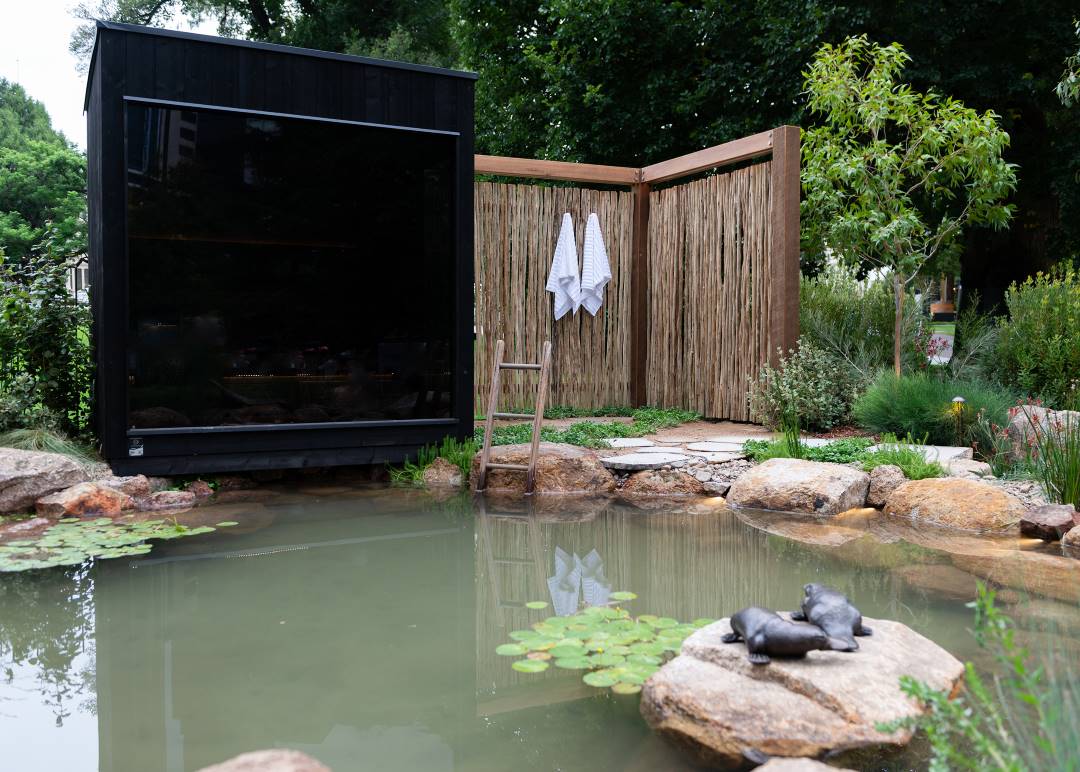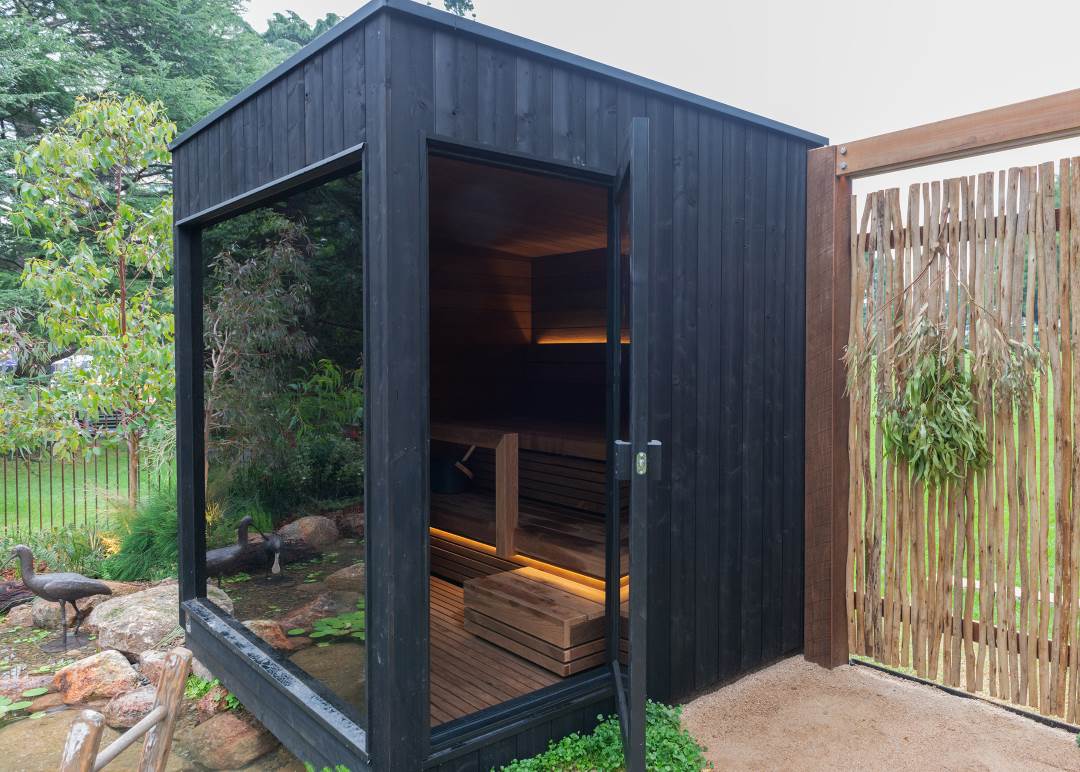
Having your very own sauna might just be the epitome of luxury living. Saunas are no longer an amenity reserved for high-end spas and retreats, with a growing demand for home installations in recent years. Installing a personal sauna is a powerful investment in your health, wellbeing and quality of life. In today’s fast-paced world, carving out time for self-care has become more important than ever. From easing muscle tension to boosting cardiovascular health, saunas offer a range of advantages that can transform your everyday routine into a ritual of renewal. Here, Melbourne Pool + Outdoor Design’s Jessica Muller chats with Anna Millers, the director of Heavenly Saunas, about all the reasons why your home needs a sauna.
Heavenly Saunas is a family-owned business that provides luxurious saunas, hot tubs and ice baths to the Australian market. The founder, Mark Millers, loved the sauna and its health benefits, buying his first Almost Heaven nearly ten years ago. “When the sauna arrived, he was blown away by the quality craftsmanship, the flawless design and the smell! Nothing smells like authentic Western Red Cedar,” Millers recounts. “So what did he do? He jumped on a plane to meet the owner of Almost Heaven and from there Heavenly Saunas was born.”
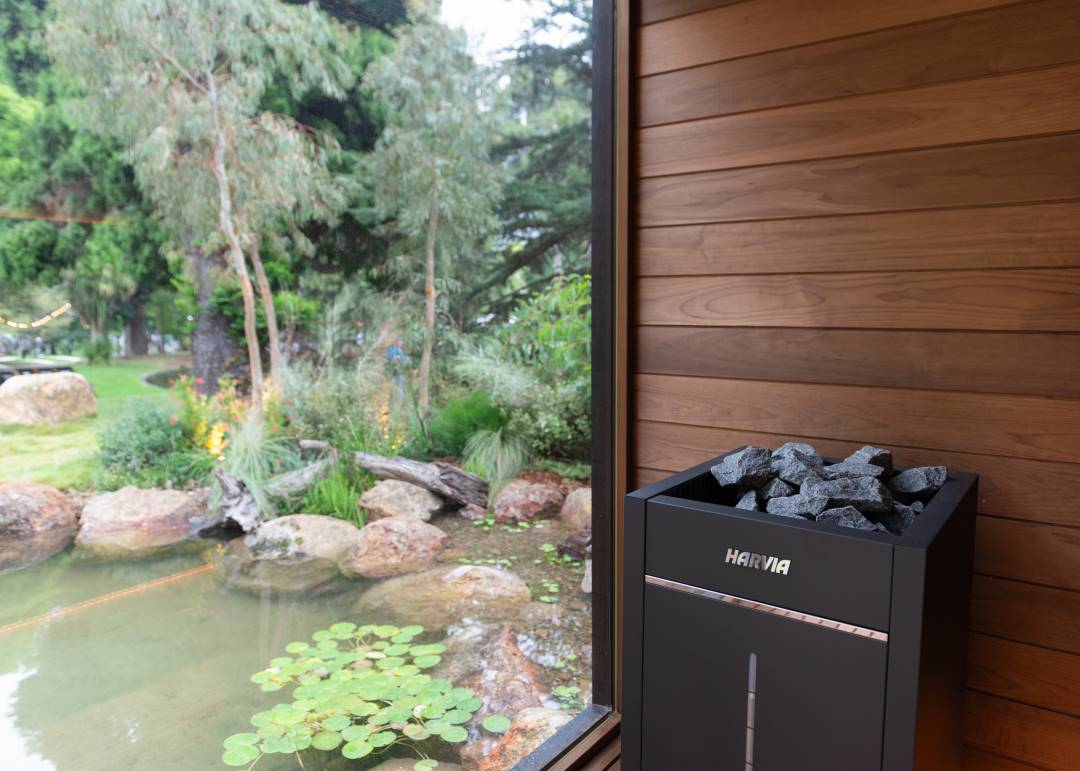
Since then, Heavenly Saunas has grown to represent Almost Heaven and Kirami Oy, as well as becoming an authorised Harvia dealer. With this level of growth, you need some help – so Mark brought his sisters, Anna and Cathy, into the business. The pair are now just as nuts about saunas and love a good hot tub and contrast therapy in the ice bath.
There is a plethora of reasons to consider a home sauna, far beyond the obvious ease of access and the freedom it offers to sauna how you want (dry, wet or in your birthday suit). However, the convenience of not having to leave your home is nevertheless undeniable. “A home sauna allows access to quick sauna therapy. Having the option to have a quick twenty-minute sauna when you want and at your leisure is a great way to incorporate the sauna into your health regime,” Millers says.
DON’T SWEAT IT… OR ACTUALLY, DO
Saunas are known to improve cardiovascular health through vasodilation. While in the sauna, there is an increase of blood flow which lowers blood pressure. “The heat in the sauna makes the heart start to work and beat faster, which improves
circulation and the health of the cardiovascular system,” Millers explains. “In addition, regular sauna assists with health acclimitisation, which leads to less risk of heart problems in the future.” A sauna has the same effect on the body as those experienced during moderate intensity exercise. “This acclimitisation improves the ability to regulate during intense and strenuous activity, potentially leading to improved endurance,” Millers adds.
Regular sauna therapy also assists muscle recovery and improves athletic performance by increasing blood flow, reducing inflammation and promoting relaxation, which enables faster recovery and enhanced endurance. “Sauna heat causes blood vessels to dilate.This means that more oxygen and nutrients are delivered to the muscles, resulting in faster repair and a reduction in muscle stiffness and soreness,” Millers describes.
FROM CEDAR TO SERATONIN
The health benefits of sauna therapy go beyond the physical, with proven psychological benefits. “Saunas have been found to assist with anxiety and stress by stimulating the release of endorphins and other neurochemicals that improve mood and reduce cortisol levels,” Millers advises. “The quiet and calming environment of a sauna also provides a space for mindfulness and meditation, further aiding in anxiety management.”
Home saunas also create a unique space for social connection. Whether it’s gathering with family after a long day or inviting friends over for a relaxed evening, a sauna encourages meaningful conversation and shared experiences in a calm, tech-free environment.
The cosy, intimate setting invites people to unwind and open-up, strengthening relationships with family and friends in a way few other home features can.
INFRAREADY OR NOT, HERE COMES THE HEAT
Now that we’ve convinced you of the sweat life, it’s time to decide the specifics of what sauna you want in your home. “First you will need to decide if you would like a traditional sauna or infrared. Then indoor or outdoor, and then the materials,” Millers advises. “Just like your kitchen oven, traditional saunas are hard wired back to the main electricity switch board – so you should think power first,” she adds.
Deciding on whether you want the sauna to be inside or outside will also help you choose the right sauna model to accommodate the space chosen. “If you have a pool or plunge area, having the option for contrast therapy can be a deciding factor,” Millers notes. There is a vast range of saunas available, from Western Red Cedar to Spruce, Helmock and Thermowood. “All of these come with pros and cons – and it can come down to a question of cost. For instance, authentic Western Red Cedar is a premium sauna wood product, and it will cost you more than any other on the market – but it does come with increased insulative properties,” Millers says. “The best you can do is narrow down what you would like and then do your research and always make sure you can view the sauna that you are selecting at a showroom – as this is the best way to know you are buying from a legitimate business and you can see what you are buying before you buy it.”