
As summer rolls around, the backyard begins to hum with activity. It’s no wonder that so many homeowners across the country decide to invest in a pool as it offers a dedicated space for you, your family and friends to enjoy all the weather has to offer. If you’re considering installing a pool, keeping it in top shape relies on a variety of essentials and optional extras. Join Melbourne Pool + Outdoor Design’s Stef Grinberg as she sits down with Justin Nicholas, general manager of Cooke Industries, as he shares his expert advice and everything you need to know to have a clean and healthy pool.
As filters and skimmers catch floating debris, anything that sinks to the bottom of the pool requires a different approach. For other debris, robotic cleaners offer a relatively cheap solution for maintaining the walls and floors of your pool, with many pool shops stocking replacement parts. Corded models require a mains power supply, while battery-operated units are less restrictive, “but may require charging mid-cycle in larger or irregularly shaped pools,” Nicholas said.
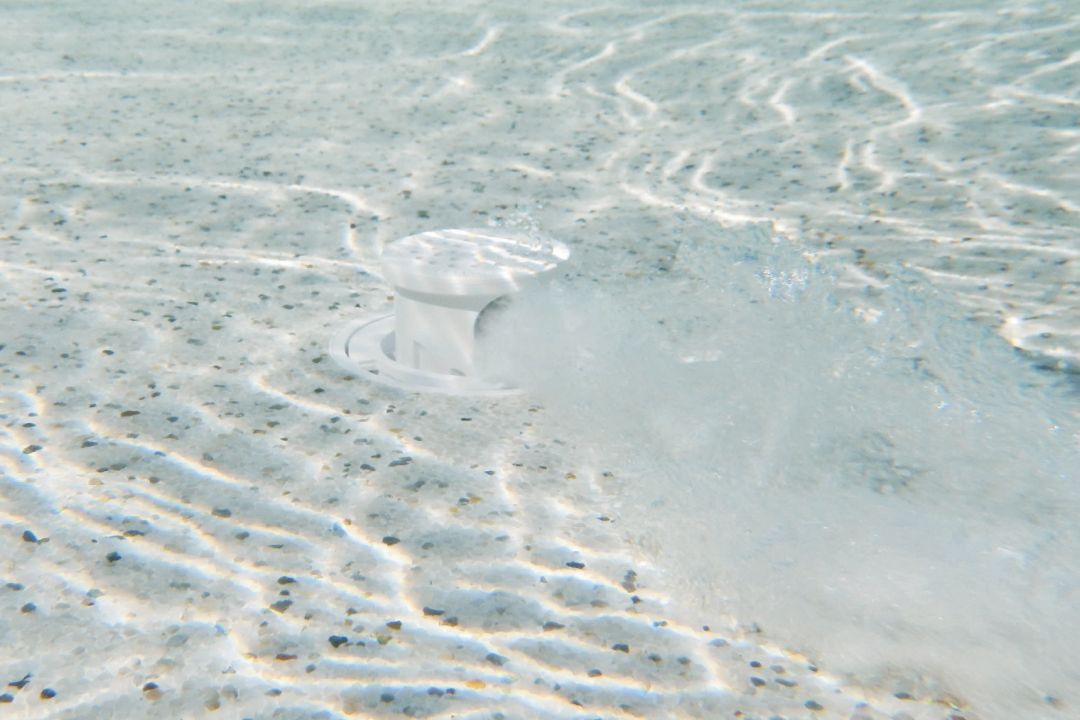
Contrasting this, in-floor systems focus jets of water along the floor, thoroughly removing debris while simultaneously improving pool circulation. While the in-floor system has a higher upfront investment and cannot be retrofitted, it uses “precise hydraulic engineering, … providing a true hands-off cleaning solution that can last for decades,” he said.
BEFORE YOU ‘DIVE’ IN…
Water circulation is the process of moving water throughout the pool, with water drawn from “one or more outlet points – skimmers and drains – using the suction power of a pump,” said Nicholas.
The water is then filtered, treated and can even be heated. After this process is complete, the water is returned to the pool through specific return inlets. “A pool’s circulation system is its ‘heart’; it provides constant movement that keeps the water healthy and improves chemical balance,” he said. Proper circulation ensures the timeliness of water turnover.
The required turnover rate is dependent on the temperature, depth, usage and chemical treatment of the pool, while the amount of water circulated is determined by the pump, pipe and equipment. Although muddy green pool water is a clear indication of neglect, “pools don’t need to look swampy to be unsafe,” according to Nicholas.
“Even crystal-clear water can hide stagnant ‘dead zones’ where treated water doesn’t reach, … without proper circulation, these pockets become breeding grounds for hidden pathogens known for causing discomfort and health issues,” he said.
Maintaining water heath and cleanliness relies on proper treatment, with a multitude of options available depending on your needs.
Successful water treatment relies on a multi-barrier approach, with various systems collaborating on the same goal of pool cleanliness. First, physical filtration removes organic debris “that would otherwise break down, feed algae and create irritants,” he said. Salt chlorinators and dosing systems handle chemical balance and preserve the pH levels of the pool while maintaining “a live chlorine residual to keep microbes at bay.”
If you’re looking for a more hands-off approach, “newer, advanced sanitisation systems take water quality management a step further by periodically measuring the pool’s chemistry and adjusting output dynamically,” he said. Nichloas explains that this option provides more stable and efficient water treatment, leaving less room for guesswork and physical intervention.
‘FREESTYLE’ POOL MAINTENANCE
Keeping your pool clean and free of particles relies on one thing: a filter. The best one for you will depend on usage, pool size, and how much pool maintenance you prefer.
The media filter uses sand, glass or other material to trap and filter debris. Smaller particles can be trapped by using finer material or having a larger filter area, which is able to maintain the correct flow rate. It requires backwashing roughly every two months, which uses water to flush out particles from the sand.
With time, the media generally needs replacement as the material can clog with oils and calcium leaving the system unable to filter properly. As with any product, upkeep is required to ensure optimal function. This filter is best for a larger pool.
On the other hand, a cartridge filter traps finer debris down to 10-20 microns. It requires a higher level of physical labour, with maintenance including removing and washing the cartridge every three to six months, depending on usage.
The cartridge typically needs replacement after a few years, and the cartridge filters are suited to smaller, compact pools. As filters and skimmers catch floating debris, anything that sinks to the bottom of the pool requires a different approach. For other debris, robotic cleaners offer a relatively cheap solution for maintaining the walls and floors of your pool, with many pool shops stocking replacement parts.
Corded models require a mains power supply, while battery-operated units are less restrictive, “but may require charging mid-cycle in larger or irregularly shaped pools,” Nicholas said.
Contrasting this, in-floor systems focus jets of water along the floor, thoroughly removing debris while simultaneously improving pool circulation.
While the in-floor system has a higher upfront investment and cannot be retrofitted, it uses “precise hydraulic engineering, … providing a true hands-off cleaning solution that can last for decades,” he said.
THE RIGHT PLAN SPEAKS ‘VOLUMES’
Pumps, filters and other equipment must meet the scope of the pool, accounting for its dimensions. Nicholas explains this hardware needs to be at a scale relative to the mass of the water to ensure that filtration and water management systems are operating within the optimal range. An expansive pool requires not only a larger pump, but an increase of pipe diameter.
This change keeps water flow stable, velocity down and allows for a reduction in friction. “You can’t rely on the brute-force solution of just throwing on a larger pump, … If we return to the ‘heart’ analogy, the pump is trying to draw and return through constricted blood vessels,” he explains.
When moving away from a typical rectangle to raised spas, curved edges or other unconventional forms, finding the right solution to meet the needs of your pool differs with each shape. “Irregular shapes, complex and non-standard builds … demand tailored solutions with bespoke fluid management,” he said.
Nicholas explains that the next step involves comparing the investment of pool equipment to the long-term benefits, value and usage it can provide for your lifestyle and the needs of your space. “At the end of the day, the right solution … should make owning the pool feel simpler, not like another chore,” Nicholas concludes.
Images courtesy of Cooke Industries