
Stones and Pebbles. They may be small, but they have a mighty impact on the look and feel of your outdoor space. Stones and pavers can be used to connect elements of an outdoor space creating a cohesive feel, while also having practical benefits and uses. Melbourne Pool + Outdoor Design’s Chloe Jaenicke speaks with the team at Yarrabee & Castlemaine Stone about how the addition of stones and pebbles can transform outdoor spaces.
Specialising in creating elegant stone features both in and out of the home, the team at Yarrabee & Castlemaine Stone are experts in every application. The team believes stones are the perfect finishing touch for any outdoor space with both their visual and practical appeal.
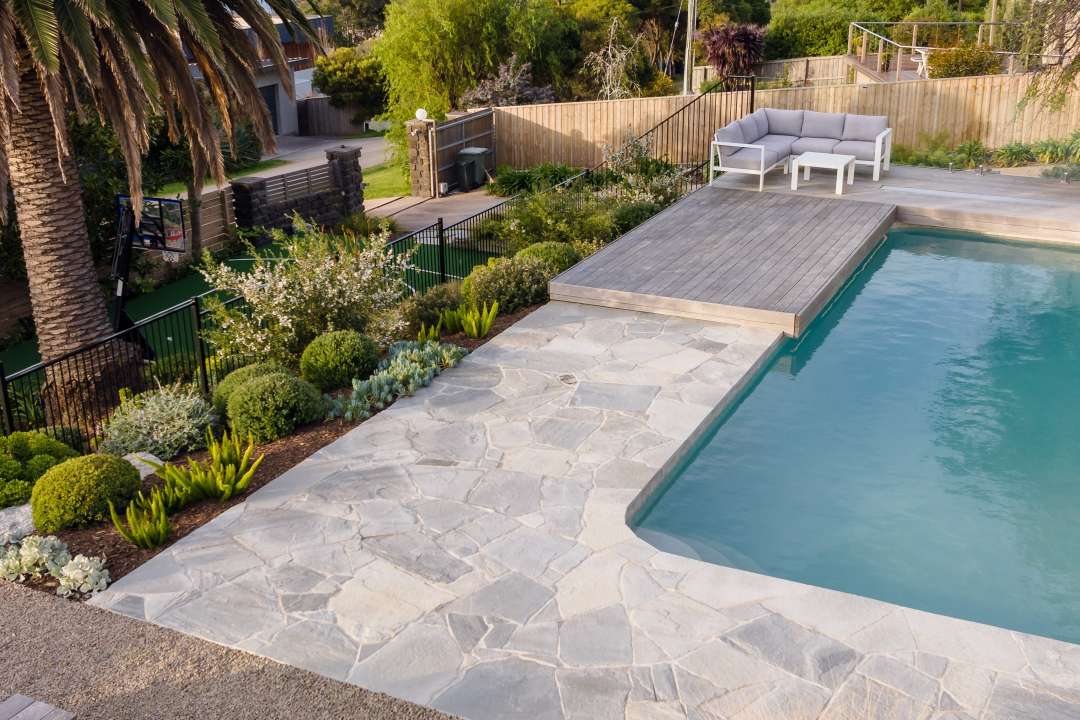
According to the Yarrabee & Castlemaine team the versatility of stone and pebble “means they can be used to soften the shift between hard landscaping and soft landscaping or garden area, outline pathways or garden beds and fill spaces that might otherwise look incomplete.”
But how do you know what stones are the right fit for your space? How do you decide if pebbles that complement the space or larger stepping stone features best suit your outdoor oasis?
THE FIRST STEP
Before deciding what will fit into your space, you must first understand the “overall design and the role the pebbles will play within a space,” along with “colour, size and texture of the pebbles.”
“It is important to look at the surrounding materials such as paving, wall cladding, the home’s exterior finishes and the landscaping,” the Yarrabee & Castlemaine Stone team says.
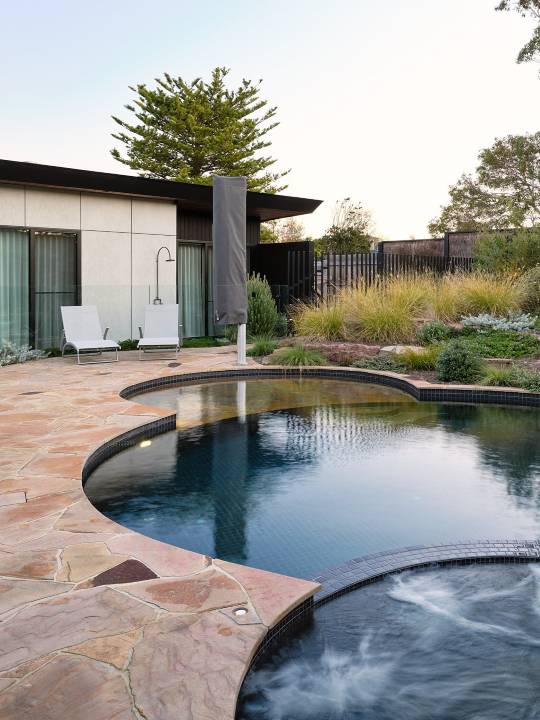
According to the team, the colour can either complement the surrounding stone for a cohesive look or provide contrast to create a stronger design feature.
They also suggest that the size of the stones should be considered in relation to both appearance and function – smaller pebbles can create a finer, more uniform finish, while larger pebbles provide greater texture and visual impact. The final key consideration when choosing your stone is the texture and shape. Both are equally important as smooth rounded pebbles create a “softer appearance,” while more angular or naturally textured stones provide more of a “organic, rugged character.”
PAVING THE WAY
It is up to you if the stones in your backyard are just a smaller design feature to complement the area or if they become the main event.
For those looking for a strong feature, stepping stones are the way to go. Being both practical and decorative, stepping stones are “individual pieces of natural stone used to create a pathway or connection through an outdoor space.” They “are positioned at comfortable walking intervals, often with grass, pebbles, gravel or groundcover surrounding them,” rather than a continuous paved surface.
In comparison to regular pavers, stepping stones “can create a softer, more organic and visually interesting feel than a continuous pathway of regular pavers,” according to the Yarrabee & Castlemaine Stone team.
“By allowing lawn, pebbles, gravel or planting to remain visible between each stone, steppers become part of the landscape rather than simply forming a hard paved surface,” they said.
The team also suggests that the stepping stones should “feel comfortable and intuitive to walk along,” with the stones guiding the path and placed at even, easy to step intervals.
“For a pathway that curves or changes direction, the placement of each stone becomes particularly important,” they said. “We recommend setting the steppers out on site before installation so the spacing, direction and overall flow can be viewed and adjusted.”
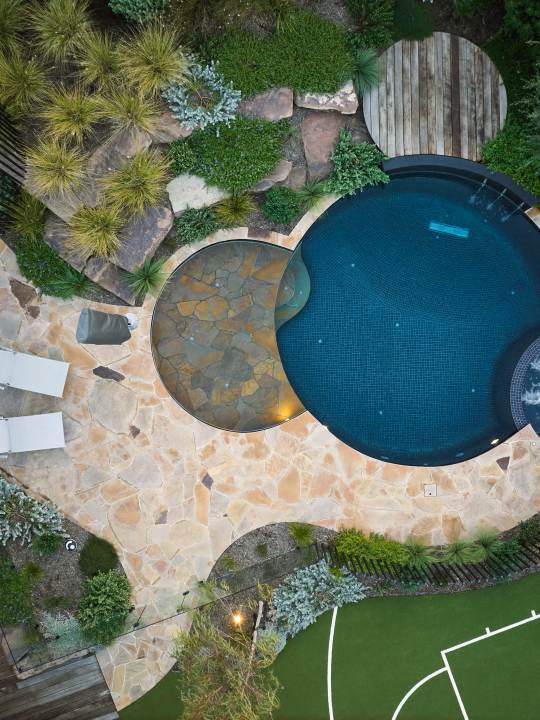
If more subtly is what you’re after, look no further than the humble pebble. According to the Yarrabee & Castlemaine Stone team, they can be “very effective in visually defining different zones within an outdoor space without the need for physical barriers.”
Every stone feature, big or small should be considered “as part of the overall landscape design from the beginning, rather than treating them as an afterthought.”
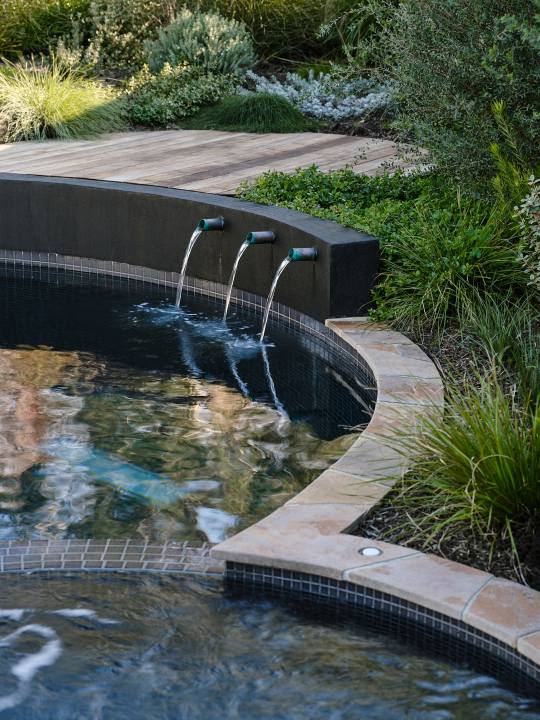
“Pebbles and stepping stones may be smaller elements, but when carefully selected, they can help connect the pool, paving, garden and surrounding architecture,” the Yarrabee & Castlemaine Stone team said.
SOLID FINISH
We all know about the aesthetic appeal of stones and pebbles, but what about the practical benefits?
The team explains that pebbles can provide several benefits around a pool area, work particularly well in garden beds, along boundaries and in areas where paving transitions into landscaping, creating a neat and low maintenance finish.
“Pebbles can also assist with drainage by allowing water to move through landscaped areas rather than leaving exposed soil, provided the area beneath them has been appropriately designed and prepared for drainage,” the team says.
“When installed over an appropriate landscape fabric, pebbles may also help suppress weeds and reduce ongoing garden maintenance.”
Both stones and pebbles are also pretty low maintenance, making them an easy addition to the backyard. For natural stone steppers, “regular sweeping and gentle cleaning will help prevent the build-up of dirt, algae and organic material that can affect both the appearance and slip resistance of the surface”, while pebbles typically only need to be “raked or redistributed.”
Images courtesy of Yarrabee & Castlemaine Stone