Whether your pool was built for fitness, family fun or pure relaxation, it’s a significant investment – so why not maximise its use year-round with a heat pump and enjoy endless swim time? Join Melbourne Pool + Outdoor Design’s Hannah McDonald as she sits down with Frankie Raso, managing director of CHR Heat Pumps, to debunk the myths surrounding pool heating – pumping the brakes on misinformation and turning up the heat on the truth.
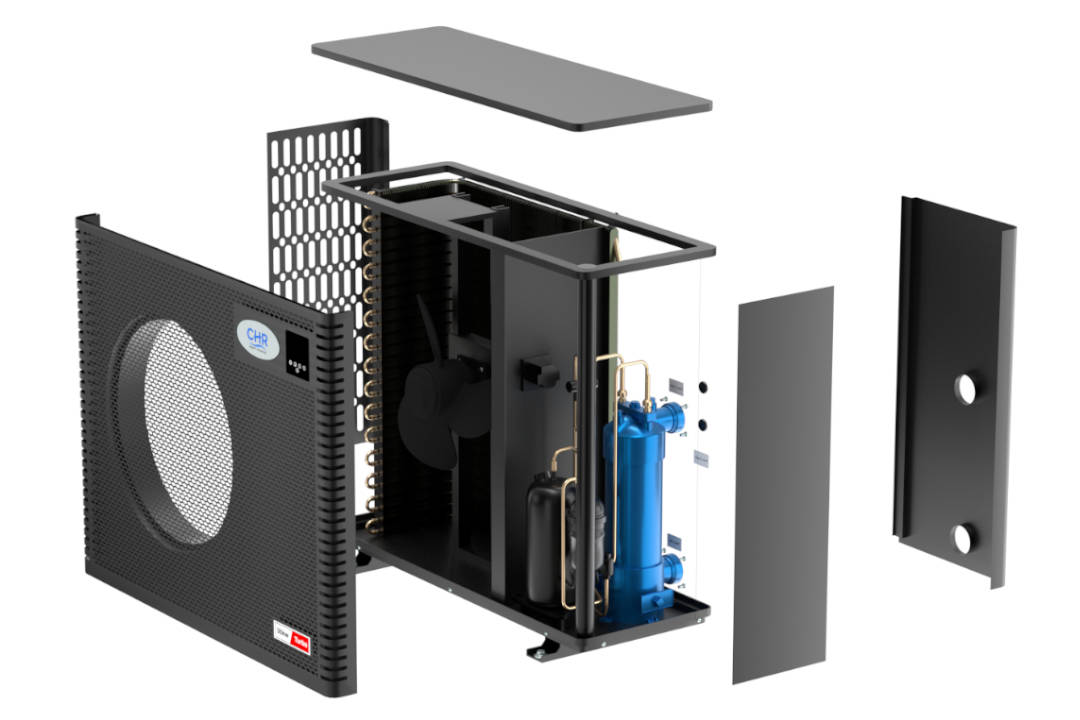
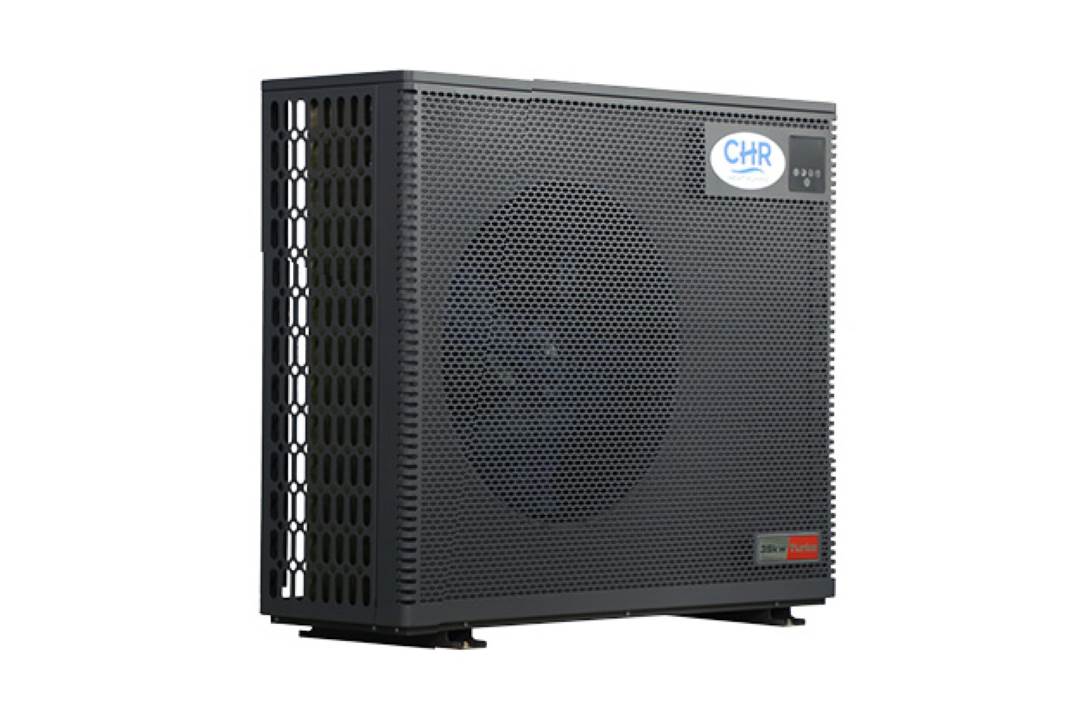
CHR Heat Pumps is an Australian-owned company specialising in the design and development of high performance, energy-efficient pool heat pumps. “Over the past five years, we’ve worked closely with a team of specialised engineers to produce the most powerful single-phase heat pump on the market – the AstroMax H35 Turbo,” Raso says. “This 35kW single-phase unit has been proven to heat 10–15% faster than any other comparable system, setting a new benchmark for performance and efficiency in the pool heating industry.”
The AstroMax Range represents the pinnacle of pool heating innovation, ensuring homeowners and pool builders achieve exceptional heating performance and outstanding energy efficiency. Despite significant advancements in pool heating technology, many people remain unaware – held back by outdated beliefs about heat pumps. Common myths persist: that they consume excessive power, cost far more than they should, and that size and placement don’t matter, leading to widespread misunderstanding and the need to bust some myths…
MYTH #1 – POWER USE
Across Australia, energy bills have been soaring. So, it’s no wonder that homeowners aim to avoid yet another household technology that chews through power. Many try to sidestep this, purchasing smaller heat pumps assuming they require less energy to run. Raso dispels this idea. “The biggest misconception is that bigger heat pumps use more power to run – they don’t. All heat pumps draw a similar amount of power relative to their efficiency; the difference lies in how long they need to run.” He continues, “a larger heat pump reaches the desired temperature much faster, which means it doesn’t have to operate for as many hours each day. A smaller unit, on the other hand, needs to run for much longer to heat, and will struggle to reach the same temperature that a higher kilowatt heat pump can perform – using more total energy in the process.” Another exorbitant use of power stems from not having the additional tools to keep the heat from escaping, like a pool cover.
“Running a heat pump 24/7 without a pool cover is like heating a house with the windows open. It’s the simplest and most effective way to reduce heat loss and speed up heating by up to 30%. A cover is essential for retaining heat – without one, the pump works overtime trying to replace the heat lost overnight, wasting energy and increasing running costs,” Raso explains.
MYTH #2 – COST
Pools can be an expensive addition to the home. Beyond installation, ongoing costs include cleaning, chemicals, equipment repairs and seasonal servicing – expenses that can add up quickly. Therefore, many owners can be tentative towards incurring further costs. Raso details the surprisingly low running costs of a heat pump. “On average, all heat pumps cost roughly $1 per hour to run, but the key difference lies in how long each unit needs to operate. AstroMax H35 Turbo – 35kW heat pump will reach the desired temperature much faster than a 24kW unit, meaning it runs for a shorter period of time – and that’s where the real savings come from.” While a larger unit might seem like it would cost more, it’s actually the smarter, more energy-efficient and cost-effective choice. It works less, heats faster and ultimately saves homeowners money over time.
MYTH #3 – SIZE
So, as discussed, size matters for energy efficiency and costs, but it also ties into a few other important things worth considering. “The main considerations are pool size, desired temperature, climate, and how often the pool is used. Many homeowners underestimate how much energy it takes to heat larger pools or maintain warmer water – which is why selecting the right-sized unit is crucial,” Raso informs. With so much expert advice available, it’s hard to believe how often homeowners purchase the wrong size pump, but Raso explains it happens more than you’d expect.
“Around half of all buyers end up with a unit that’s too small for their pool. The result is always the same: frustration. The pool never quite reaches the desired temperature, the heat pump runs for excessive hours trying to keep up, and energy consumption (and electricity costs) climb. By investing in the correct size upfront, homeowners benefit from faster heat-up times, lower electricity usage and longer equipment lifespan – ultimately saving money and enjoying their pool the way it was meant to be used,” he ensures.
MYTH #4 – PLACEMENT
When asked how important placement was to heat pump efficiency, Raso’s answer was emphatic. “It’s absolutely critical. Airflow directly impacts both performance and longevity. A heat pump needs unobstructed air movement to operate efficiently, and poor placement is one of the most common reasons a system underperforms. If a unit is installed without the correct clearance, it can reduce performance by up to 30–40% and significantly shorten its lifespan. The compressor and fan motor end up overworking
to compensate for the lack of ventilation, leading to higher energy consumption and premature wear,” he describes. “That’s why CHR designed its Optimised Airflow System, which directs air upward and to the sides rather than straight out the front. This innovative design allows for installation in compact areas with a minimum front clearance of just 450mm, giving homeowners and pool builders greater flexibility – without sacrificing performance, efficiency, or reliability.”
With the research done and the myths busted, you can feel confident: when it comes to heat pumps, size and placement matter, running costs are lower than expected and bigger really is better. “A quality inverter heat pump paired with a good cover is the ultimate combination for fast, efficient and affordable pool heating – keeping your pool warm, your energy bills low and your system running at its best,” Raso concludes.
Images courtesy of CHR Heat Pumps and Unsplash